Why Is Autism Representation Important in the U.S.?
U.S. Department of Health and Human Services Secretary Robert F. Kennedy Jr.’s recent spread of misinformation regarding autism has added to false narratives of the condition. Kennedy has incorrectly linked it to vaccines, circumcision, and even Tylenol. The reality is, according to research from the UCLA David Geffen School of Medicine, its a neurodevelopment difference rooted in inherited genetic mutations.
Misconceptions about autism often stem from how autistic people communicate, think, and express themselves in ways that may differ from neurotypical expectations. These misapprehensions lead to stereotypes that portray autistic individuals as aggressive, intellectually disabled, or incapable of communication. With people like R.F.K Jr. adding to the false narratives associated with autism, it’s more important than ever to challenge these narratives. Turning to the arts can be a powerful way to bring the truth to light and amplify the lived experiences of autistic people.
What Happens When Autism is Misunderstood?
When society fails to understand autism it overlooks the reality that in the United States, approximately 1 in every 31 children and 1 in 45 adults are autistic, according to Autism Speaks. Yet, there is still a lack of understanding about the lives of people on the spectrum which continues to create dangerous precedents, ones that can lead to real world harm for autistic people because when awareness is absent, it creates conditions for abuse.
In an interview with Dr. J. Chad Sweeney, an autistic professor and poet teaching creative writing at CSUSB, he referenced a 1965 Life Magazine article titled “Scream, Slap, and Love,” . It discusses a form of Applied Behavioral Analysis for autistic for children that relied on screaming and slapping as methods to condition children to behave “normally” by punishing undesirable actions and rewarding acceptable ones.
Dr. Ivar Lovaas, who was then an assistant professor of psychology at UCLA, developed this program. According to the article, he argues that the idea of mental illness is misguided because it excuses individuals from accountability for their actions, and he believes that modifying a child’s external behavior can bring about internal psychological change. This philosophy left deep scars on those he treated and left a lasting impact on how society viewed autism for years to come.
Let’s now fast forward to March 9, 2024. The family of Ryan Gainer, a Black teenager with autism, called for help during a behavioral crisis. Instead of receiving support, responding officers shot and killed Ryan within moments of their arrival. His story is not an isolated incident. According to Disability Rights California, “police shootings kill Black people at twice the rate of white people, one-third to half of police use-of-force incidents involve a person with a disability, and 50 percent of people killed by police have a disability.”
Racial prejudice makes autistic people of color especially vulnerable to false perceptions. When that bias meets behaviors others mistake for threats instead of distress, the outcomes can be horrific. Proper training and awareness could prevent many of these unnecessary deaths by helping officers recognize and respond appropriately to autistic people.
As one can see, the consequences of ignorance are severe both then and now. Although 60 years have passed since Dr. Ivar Lovaas’ experiments, we still see how misconceptions and or the lack of understanding can lead to harm and even death. This is why representing autistic people is so vital. When society ignores an entire community, it becomes easier to dehumanize and mistreat them simply because they don’t fit the mold of what’s considered “normal.”
What Happens When Autism Isn’t Intentionally Represented?
In response to these misconceptions, portrayals of autistic characters have become far more open and intentional in recent years. Today, it’s common for both the audience and characters in the show to acknowledge when a character is autistic. This kind of transparency allows stories to explore autism with honesty and depth, offering insight into how people on the spectrum experience the world in their own unique ways. But it wasn’t always like this.
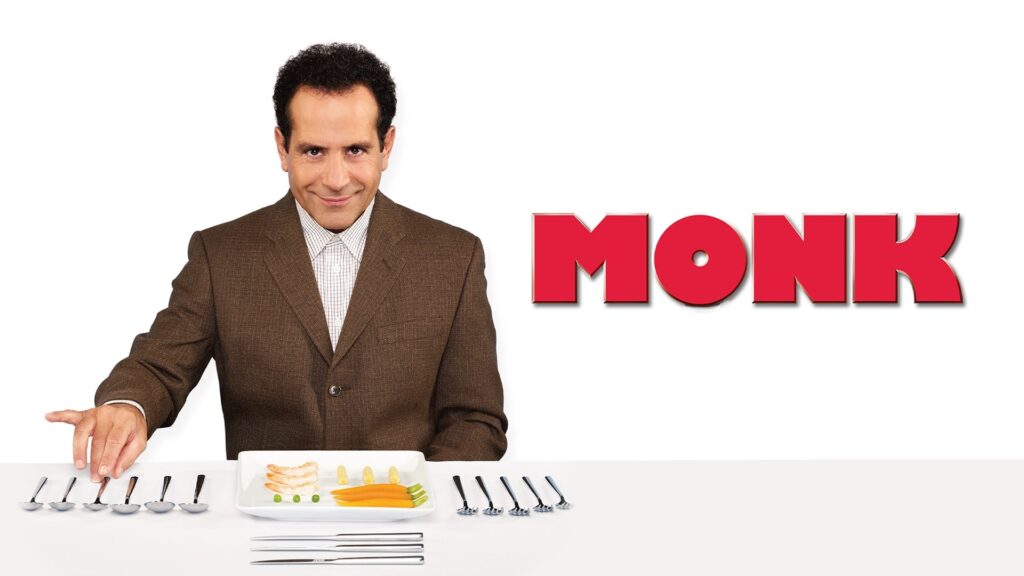
To see how far things have come, it’s worth looking back to 2003 to a television series called “Monk”. The show follows Adrian Monk, a brilliant detective with an amazing track record for solving cases. Although the show’s creators have said Monk has obsessive-compulsive disorder (OCD), many of his traits also align with autism, as the symptoms for both neurotypes can overlap according to the International OCD Foundation. For instance he struggles to understand jokes and social cues, is highly sensitive to light, sound, and touch, and tends to interpret language literally. These characteristics show an autistic presentation, even though no one ever explicitly acknowledged it. Characters such as Monk are what the autism community refers to as “Autism Coded”
This lack of clarity can have consequences. As Dr. Sweeney explains:
If you don’t recognize that the character is autistic and you allow people to mistreat him, out him, ostracize him, other him, reject him. If the point of the show is, ‘Well, we all know he’s a pain in the ass, but we put up with him’ that is a dangerous approach. Especially in Monk, where everybody is making fun of him, he’s punished constantly for his character type.
When creators fail to acknowledge an autistic-presenting character as such, they set a troubling precedent. Audiences may misread the character’s behavior, laugh at their struggles, and view their differences as flaws. Without explicit and intentional representation, viewers interpret these traits through their own biases instead of the lived experiences of autistic individuals.
What Does Clear Representation Do for the Autistic Community?
Before media began portraying people on the spectrum intentionally, society often treated autism as a taboo subject, rarely discussed openly. In recent years, however, a growing number of shows have helped shift public attitudes by including autistic characters and storylines that reflect real experiences of people on the spectrum. Before media began portraying people on the spectrum intentionally, society often treated autism as a taboo subject, rarely discussed openly. In recent years, however, more shows have included autistic characters and storylines that reflect real experiences, helping shift public attitudes.
Series like “Love on the Spectrum”, “Atypical”, “The Good Doctor”, “The Big Bang Theory”, and its prequel “Young Sheldon” have brought autism into mainstream conversations, helping to normalize it through visible and relatable portrayals. These shows highlight the social challenges, unique communication styles, and sensory experiences that autistic individuals navigate in their everyday lives.
Characters such as Sam from “Atypical”, Sheldon from “The Big Bang Theory” and Dr. Shaun Murphy from “The Good Doctor” show audiences how autistic people navigate jobs, friendships, relationships, and family in their own unique ways just like everyone else. Their stories make it easier for viewers to recognize autism in real life. Without these kinds of portrayals neurotypical people may rely on misconceptions or stereotypes, leading to misunderstanding and stigma.
Dr. Sweeney explains it best: “When some kind of character flaw is assigned to an autistic person, when they aren’t flawed at all they’re just autistic that’s when the misread happens. That’s where the prejudice that leads to ostracism, otherness, and abuse happens.”
Dr. Sweeney’s point shows why representation is important. When the media portrays autistic people with empathy and respect, it helps break harmful stereotypes, and normalizes the many ways autistic people experience and interact with the world. This kind of visibility empowers those on the spectrum to embrace their authentic selves without feeling pressured to hide, mask, or conform to societal expectations.
What Does the Future Representation of Autism Look Like?
While media representation has broadened public understanding of autism, there is still room to improve how they are portrayed. When looking at shows like The Big Bang Theory, Atypical, and The Good Doctor, there is a clear pattern of autistic characters all being cisgender, white, and male. In the future, it’s important that portrayals of autism become more diverse and inclusive. Autism exists across all communities and identities, and media representation should reflect that reality.
Dr. Sweeney also points out that “The problem with media representation is the [autistic] character is a savant and their only accepted when they earn that acceptance through extortionary means, you can’t just be normal and be autistic”. This trope continues to appear in shows like The Good Doctor and The Big Bang Theory, where characters’ autism is accepted mainly because they’re portrayed as geniuses in their fields. Atypical avoids this to some extent, but Dr. Sweeny hopes future portrayals move away from it, emphasizing that autistic people deserve acceptance for who they are and not for being extraordinary.
Casting practices also need to change. Non-autistic actors often play autistic characters, limiting opportunities for autistic performers and weakening authentic representation. Dr. Sweeney explains, “Only through true representation can we be given our place, our proper place in the room.” He also emphasizes that authentic storytelling must extend behind the camera to include autistic writers. As society works to normalize autism, we help build a future where, in Dr. Sweeney’s words, “The new normative is the diverse.”