Out of Focus: How U.S. Media Skews Mexican Identity

When thinking about Mexican representation in U.S. media, not many movies come to mind. Despite a population of over 37.2 million Mexicans in the U.S., according to the Pew Research Center, media representation remains limited not only in quantity but also in its inability to reflect the rich diversity within the Mexican Identity .
What Were the Early Representations?
The lack of authentic Mexican representation in U.S. media can be traced back to systemic exclusion rooted in early court rulings. In an interview, Mariana E. Vega, Instructor of History and Ethnic Studies, points to court ruling People v. Hall (1854),
“Which removed the right for non-white people to defend themselves against white folks … from those early incipient moments of U.S.-Mexican history. Mexicans didn’t even have a chance to represent themselves and we see that still today, that we [Mexicans] are not in control of our own narratives”
These early set of laws would be the start of the false narrative for the Mexican people. Vega addresses that one of the early depictions of Mexicans in the U.S. was
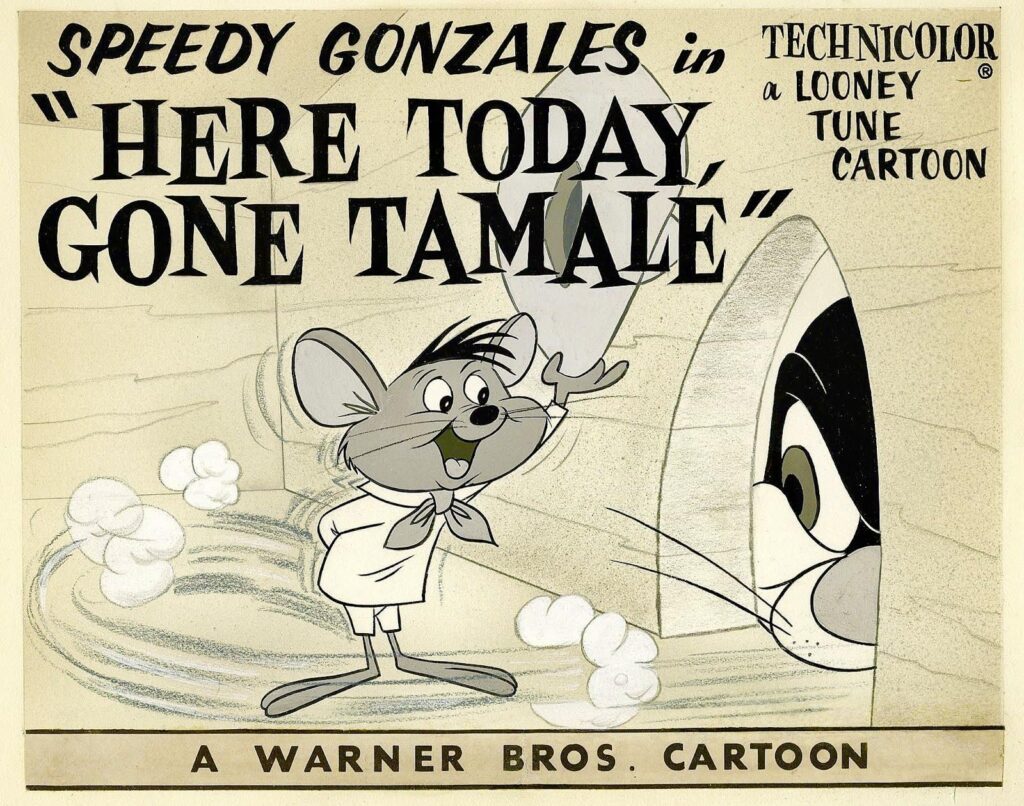
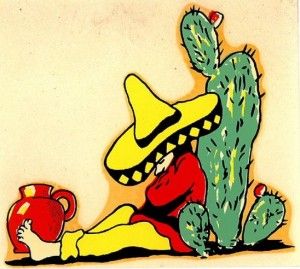
“The idea of the lazy Mexican that is sitting on the cactus inebriated … And from this lazy image we have the opposite which is Speedy Gonzales which is little mouse with his massive sombrero…he’s this fast little worker, he doesn’t stop, he never stops moving so Mexicans are stuck in this odd contradiction like there’s no possibility to escape this dichotomy of either being lazy or hyper productive”
She says that early depictions have made Mexicans to be two dimensional characters with exaggerated aspects to them rather than being depicted as whole and complex individuals.
What Does Representation Look Like Today?
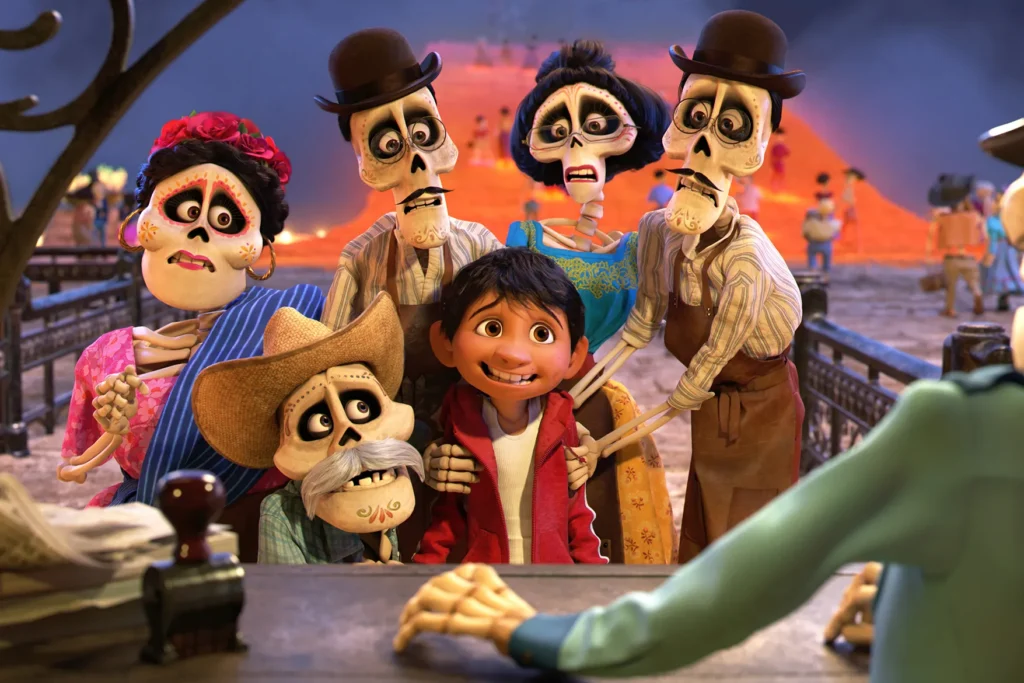
Though representation has improved, it remains far from complete. Pixar’s film Coco, although widely praised for its cultural accuracy, still relies on familiar stereotypes that the U.S. media often associates with Mexicans. As Vega points out,
“The U.S. media falls back to these handful of ideas of Mexicans as the mariachi, Mexicans as the maid, Mexicans and the Day of the Dead, Mexicans as manual laborer workers…If maybe we are able to move past that one-dimensional character, then maybe a more holistic [representation] is possible.”
While Coco does highlight important aspects of Mexican culture, much of what it presents aligns with the limited portrayals Vega describes. Rather than reflecting the diverse and complex realities of Mexican life today, the film risks becoming performative, offering a curated version of Mexican identity based on what is most recognizable or palatable to U.S. audiences.
Who’s Missing in Media Portrayals of Mexican Identity?
What is crucially missing from the representations of the past and of today is Mexico’s internal diversity. Film portrayals often feature brown-skinned characters with dark hair and eyes, which does reflect many Mexicans, but not all. Vega emphasizes,
“I can’t stress enough that there is nothing wrong with the stereotype itself. There is nothing wrong with being brown, there is nothing wrong with having dark skin and dark hair and being short or having a mustache. Brown is and forever will be beautiful… The problem now is the way that the stigma… has been weaponized against us [Mexicans].”
This weaponization of one stereotype in the U.S. has resulted in the erasure of the ethnic diversity within the Mexican population.
In order to recognize those being erased from Mexican representation, it’s important to first recognize the diversity shaped by Mexico’s colonial history, primarily under Spain, and later France. This history gave rise to Mexicans with European features, such as light skin, blonde or red hair, and blue or green eyes. There are also Afro-Mexicans, descended from the 200,000 enslaved Africans brought to Mexico during the era of “New Spain” via the transatlantic slave trade.
Mexico abolished slavery in 1837 well before the United States and granted freedom to enslaved people who crossed into its territory, leading Africans to settle and become part of the Mexican identity. According to the 2020 Mexican census, 2.6 million people in Mexico self-identify as Afro-Mexican, accounting for about 2% of the population. Today, Afro-Mexican communities are prominent in Guerrero, Veracruz, Oaxaca, Jalisco, and the State of Mexico. They are recognized as one of the three foundational cultural roots of the nation: Indigenous, Spanish, and African.
Asian communities have also long been part of Mexican history. According to Evelyn Hu-DeHart, Professor of History and Asian American Studies at Brown University, The Manila Galleon trade that connected Mexico to the Philippines for 250 years brought over enslaved Filipinos, Japanese and Chinese artisans. Later, after the U.S. passed the Chinese Exclusion Act, many Chinese migrants traveled to border cities in México like Mexicali, Ensenada, and Sonora in hopes of crossing into the U.S. However, many chose to stay and settle in Mexico during its rapidly growing industrial era. Today, Asian communities remain prominent in Mexico’s border cities.
What Does Representation Look like for the Future?
When discussing accurate representation of Mexicans in U.S. media, Vega asks,
“How can you make an all-encompassing ice cream flavor, if that makes sense? México is not just one ice cream flavor. México is brown, México is Black, México is white, México is a rainbow. And I would dare say too that if we can depict a little bit of that, we can go a step forward.”.
Capturing the full complexity of Mexican identity in media is impossible due to the country’s vast cultural diversity, but a meaningful start would be allowing Mexicans to tell their own stories from their own perspectives. This shift would help move beyond performative stereotypes and open space for authentic expressions of what it means to be Mexican. Vega emphasizes the need for more grounded portrayals.
“We [U.S.] can do depictions that look more normal, that don’t have to rely on folklore or history or fantasy… They [U.S. media] can portray Mexicans as what they are, people simply living their lives. They own businesses, they are teachers, they are students. This morning, I woke up and listened to Phil Collins’ Another Day in Paradise. I wasn’t listening to corridos or reggaetón. Even though we incorporate our Mexican-ness into our everyday lives, we are not living ‘intense México’ every day.”
Her message is clear: in order to achieve a more authentic representation of the Mexican community in the media, we must move beyond exaggerated stereotypes and instead highlight the everyday humanity and lived experiences of Mexicans.